Shared vs Cloud Hosting Explained: Which One Is Right for You?
Shared hosting and cloud hosting are the two most commonly discussed types of web hosting, and they represent genuinely different approaches to infrastructure rather than just different price points. Choosing between them well requires understanding what each actually offers and what you are giving up.
How Shared Hosting Works
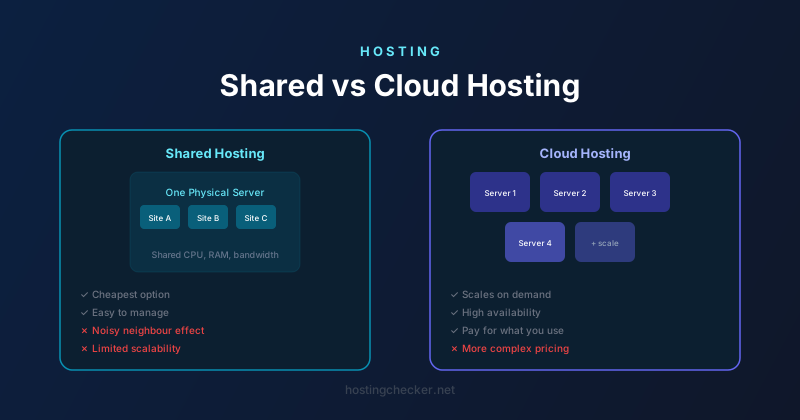
In shared hosting, many websites are hosted on a single physical server and share its resources: CPU, RAM, disk I/O, and network bandwidth. A typical shared hosting server might host hundreds or even thousands of websites. The hosting company manages all the server administration, software updates, and infrastructure maintenance. You manage only your own site through a control panel like cPanel or Plesk.
The economics of shared hosting work because most websites, most of the time, use very little of the resources available on a modern server. A website that serves a hundred visitors a day barely touches the CPU even on a modest machine. By packing many such sites onto one server, the hosting company can offer very low prices while still operating profitably.
The Noisy Neighbour Problem
The fundamental risk of shared hosting is what the industry calls the noisy neighbour effect. Because resources are shared, another website on the same server can degrade your performance. If a neighbour site has a traffic spike, runs inefficient code, or gets hit by a bot attack, it can consume a disproportionate amount of CPU or database connections. Your site slows down through no fault of your own.
Good shared hosting providers implement resource limits and actively monitor for abuse. They move resource-heavy sites to other servers or throttle accounts that exceed limits. But the fundamental shared nature of the infrastructure means some exposure is unavoidable.
How Cloud Hosting Works
Cloud hosting runs your site on virtualised infrastructure spread across multiple physical machines and often multiple data centres. Resources are allocated to you from a pool and can be adjusted dynamically. The key architectural difference is that your site is not tied to a single physical machine. If one machine fails, your workload can continue on another. If traffic spikes, additional resources can be allocated without a service interruption.
Cloud platforms like AWS, Google Cloud, DigitalOcean, and Linode operate large pools of computing resources and offer them on demand. You pay for what you actually use, often billed by the hour or even by the minute. This makes cloud hosting economically efficient for variable workloads but potentially expensive if you are not careful about resource usage.
Performance and Predictability
Cloud hosting offers more predictable performance because your allocated resources are yours. A virtual machine with two CPU cores and four gigabytes of RAM has guaranteed access to those resources. On shared hosting, resource allocation is softer and subject to what everyone else on the server is doing at the moment.
For a content site with predictable traffic, shared hosting often works fine. For an application with variable load, a business that cannot afford performance degradation during traffic spikes, or a site where performance directly affects conversions, the predictability of cloud hosting matters.
Scalability
Scaling shared hosting means upgrading to a higher tier plan, which involves a migration. You move to a plan with more resources but you are still on a shared server, just with more allocation. Scaling down is similarly manual.
Cloud hosting can scale dynamically. You can add more CPU and RAM to a running virtual machine with minimal downtime on most platforms. Better still, you can architect your application to scale horizontally by adding more instances behind a load balancer when traffic increases. This kind of elastic scaling is simply not possible on traditional shared hosting.
Management Overhead
Shared hosting is managed by definition. The host handles the operating system, security patches, server software, and infrastructure. Your responsibility stops at your application and content. This is a genuine advantage for people who want to focus on their site rather than server administration.
Cloud hosting typically means more responsibility. If you are running a raw virtual machine, you are responsible for the operating system, security updates, server software configuration, and monitoring. Managed cloud hosting services exist that handle this for you but they usually cost more and narrow your configuration options.
Choosing Between Them
Shared hosting is the right choice for personal sites, small blogs, and simple websites with modest traffic where cost is the primary concern. Cloud hosting is the right choice when you need predictable performance, expect traffic variability, want the ability to scale, or are running an application where reliability and performance directly affect your users or revenue. The middle ground of managed VPS hosting, which gives you a dedicated virtual machine with managed administration, is worth considering for sites that have outgrown shared hosting but do not yet need a full cloud architecture.