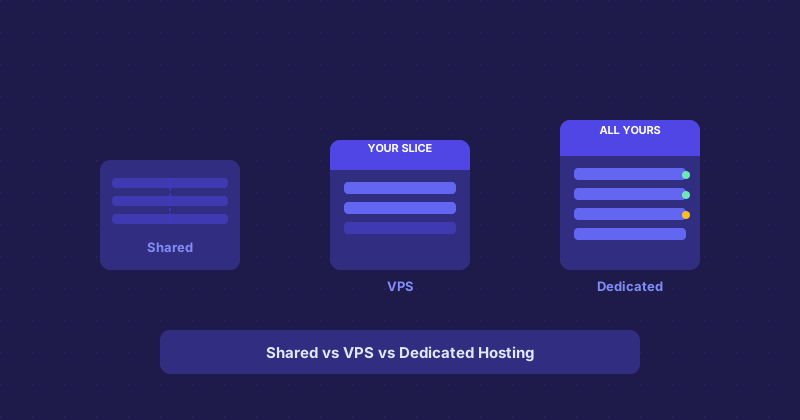
Shared Hosting, VPS, or Dedicated Server — Which One Do You Actually Need
Picking a hosting plan is one of those decisions that is easy to overthink. The hosting industry does not help by wrapping simple concepts in confusing marketing language. Here is a straightforward breakdown.
Shared Hosting
On a shared host, your website lives on a server alongside dozens or hundreds of other websites. The server's CPU, RAM, and bandwidth are distributed among all of them. You do not have root access. The host manages the server.
Shared hosting is fine for:
- Personal blogs and portfolios
- Small business sites with limited traffic
- WordPress sites under a few thousand monthly visitors
It falls apart when traffic spikes hit, when a noisy neighbor on the same server hammers resources, or when you need any kind of custom server configuration.
Cost: typically $3–$15/month.
VPS (Virtual Private Server)
A VPS gives you a virtualized slice of a physical server. You get dedicated CPU and RAM allocation, root access, and the ability to install whatever you want. Other VPSes run on the same physical machine, but you are isolated from them.
VPS is the right choice for:
- Sites that have grown past shared hosting limits
- Developers who need custom environments
- Applications that require specific software versions or configurations
- Anyone running multiple sites who wants them isolated
You need to be comfortable with basic Linux administration, or willing to learn. Cost: $10–$80/month depending on specs.
Dedicated Server
You rent an entire physical server. No virtualization, no neighbors, full hardware access. Maximum performance and control.
Dedicated servers make sense for:
- High-traffic sites with consistent resource demand
- Applications with strict compliance requirements
- Situations where shared CPU cycles are genuinely not acceptable
Cost: typically $80–$400+/month. You are paying for the machine whether you use all of it or not.
The Cloud Is a Different Category Entirely
Cloud hosting (AWS, GCP, Azure, DigitalOcean) sits orthogonally to the above. You can run equivalent configurations of any of the above on cloud infrastructure, but you pay per-usage rather than a flat monthly fee, and you get access to a much richer ecosystem of services. The tradeoff is complexity and cost unpredictability.
My Practical Recommendation
Start with shared hosting if you are new and your traffic is low. Move to a VPS when you start hitting limits or need more control. Only reach for dedicated hardware when you have a specific, measurable reason. Most sites never need it.