How to Pick a Domain Name That Will Actually Serve You Long Term
Choosing a domain name is one of those decisions that feels quick but follows you for years. A bad domain is hard to market, embarrassing to say out loud, and difficult to change once you have built an audience around it. Here is the framework that holds up in practice.
Short Beats Long, Every Time
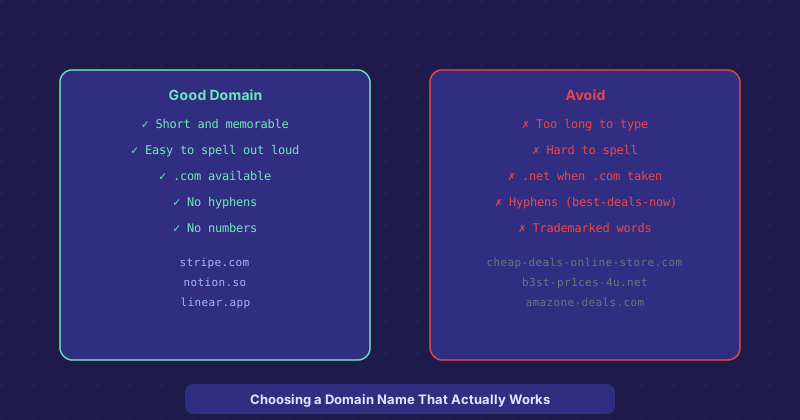
The shorter a domain, the easier it is to remember, type, say out loud, and fit in a social media bio. There is no magic number, but anything under 15 characters is workable and under 10 is genuinely good. Long domains — the kind that try to cram in every keyword — are hard to remember and look untrustworthy in a browser bar.
The test: can you say it clearly on a phone call without spelling it out? If you find yourself saying "that is a hyphen, not a space" or "no, it ends in .net not .com," the domain is already working against you.
Get the .com If You Possibly Can
People default to typing .com when they try to recall a URL. If your brand is on .io or .co and someone else owns the .com, you will lose traffic to typos forever. This matters less if you are building something technical where .io has become genuinely accepted, or if you have strong brand recognition so people search for you rather than type the URL directly. But for most businesses, the .com is worth paying a premium for or working harder to find a domain that has it available.
Avoid Hyphens and Numbers
Hyphens look spammy — the early 2000s SEO era poisoned that well permanently. Numbers create ambiguity: is it the numeral 4 or the word "four"? Both patterns make the domain harder to communicate verbally and signal low-quality to anyone who sees it. There are almost always better alternatives.
Check for Trademark Issues Before You Register
Registering a domain that uses a trademarked name — even a partial match — can lead to UDRP complaints and losing the domain you have built a site on. Before registering, do a quick trademark search in your country and in the US (USPTO.gov). If a large brand owns a similar mark, either find a different name or get legal advice. Losing a domain two years after launch is a painful and preventable problem.
Say It Out Loud Multiple Times
Read it to someone over the phone. Does the spelling match what they hear? Domains with "ie" vs "ei," doubled letters, or unusual spellings cause persistent confusion. "Fiverr" works because Fiverr is a major brand — a new site with that kind of spelling quirk does not have that advantage.
Check Social Media Handle Availability
Even if you are not active on every platform, you want to claim your brand name across major social networks. Before settling on a domain, check Twitter/X, Instagram, YouTube, LinkedIn, and TikTok. Tools like Namecheckr let you check dozens of platforms simultaneously. Consistent handles across platforms make you much easier to find.
Avoid Exact Match Keyword Domains
There was a period when "buyredshoes.com" ranked better than "nike.com" for red shoes. That era is over. Exact match keyword domains have almost no SEO advantage today and often signal low quality. A strong brand name will serve you better than a keyword-stuffed domain that reads like an advertisement.
What to Do When Your Ideal Domain Is Taken
First, check if the owner might sell — WHOIS lookup, then reach out. Many registered domains are parked and owners will negotiate. If the price is too high or the owner is unresponsive, consider: adding a modifier (get, use, try, the, app), choosing a different TLD that genuinely fits (a .io for a developer tool, a .design for a design studio), or rethinking the brand name itself. If you are early enough in the process, changing the name is far less painful than living with a bad domain for years.