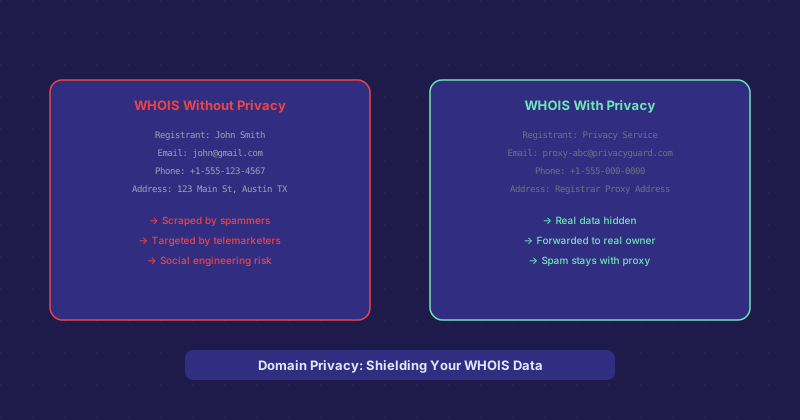
How Domain Privacy Works and Whether You Actually Need It
When you register a domain, your name, email address, and sometimes phone number and physical address get stored in a public database that anyone can query. Domain privacy — also called WHOIS protection or privacy protection — hides this information. Here is how it actually works and whether it is worth enabling.
What Gets Published Without Privacy
The domain registration system has historically required registrants to provide contact information that gets published in WHOIS records. By default, a lookup of your domain at any WHOIS service shows the registrant name, email address, mailing address, phone number, and the same information for administrative and technical contacts. This data is freely accessible to anyone with an internet connection.
The practical consequences: your email gets harvested by spammers, you receive calls from domain acquisition brokers, cold-call SEO and web design agencies find you, and your home address (if you registered from home) is visible to anyone curious or malicious enough to look.
How Privacy Protection Works
When you enable domain privacy, your registrar substitutes their proxy information for yours in the public WHOIS record. Instead of your name and email, the record shows something like "Privacy Service Inc." and a proxy email address like proxy-abc123@privacyguard.com. The phone number and address are replaced with the privacy service contact details as well.
The privacy service forwards legitimate contact attempts to you — emails sent to the proxy address are relayed to your real email, though with spam filtering applied. Legal notices and domain-related communications from ICANN or the registrar still reach you via the proxy layer.
What Privacy Protection Does Not Do
Domain privacy hides your information from casual public WHOIS queries, but it does not make you anonymous in any meaningful legal sense. Registrars are required to maintain accurate registration data internally and must provide it to authorities with a legitimate legal request — law enforcement, court orders, UDRP dispute proceedings. If someone has a legitimate legal interest in your identity as a domain owner, privacy protection will not shield you from that process.
Privacy protection also does not hide your website content, hosting provider, or any information you publish on the site itself. WHOIS data is just one data point about a domain — there is plenty of other publicly available information about most domains and sites.
GDPR and the Evolving WHOIS Landscape
The European General Data Protection Regulation (GDPR) significantly changed WHOIS practices starting in 2018. Because publishing personal data of EU residents without consent violates GDPR, many registrars stopped publishing registrant personal data for EU-based registrations automatically. ICANN developed a tiered access model (RDAP) where some data is publicly available and more detailed data requires justified access requests.
The practical effect is that for many recent registrations, registrant personal information is already redacted from public WHOIS even without explicitly purchasing privacy protection, particularly for EU registrants. But the protection varies by registrar, TLD, and jurisdiction.
Is It Worth Enabling?
Most major registrars now include domain privacy at no extra charge — Cloudflare Registrar, Porkbun, and Namecheap all offer it free. If it is free, there is no reason not to enable it. If your registrar charges extra (some still do, despite it being standard elsewhere), the question is whether $3–10 per year per domain is worth it to reduce spam and protect your personal information. For most people, yes.
The exception: if you are registering on behalf of a business and your business address is the appropriate contact, privacy protection may not add much value since the business information is public anyway. But for personal domains, always enable it.