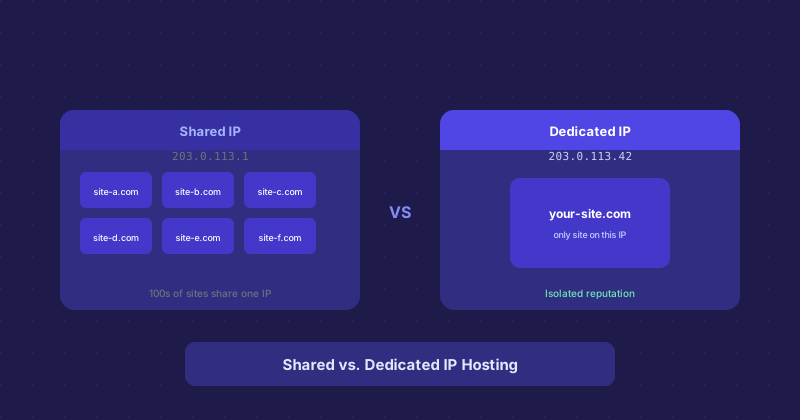
Dedicated IP vs. Shared IP: Does Your Hosting IP Address Actually Matter
On shared hosting, your site shares an IP address with dozens or hundreds of other websites on the same server. On a VPS or dedicated server, you typically get your own IP. Whether this matters depends almost entirely on what you are doing with the server.
The Old Argument for Dedicated IPs
Years ago, a dedicated IP was required for SSL certificates. You could only have one certificate per IP address because the server needed to know which certificate to present before the TLS handshake completed — and it could not read the hostname until after TLS. This created a hard dependency: HTTPS required a dedicated IP.
That changed with Server Name Indication (SNI), a TLS extension that lets the client send the target hostname at the start of the handshake. Today, virtually all browsers and servers support SNI, which means one IP can serve hundreds of HTTPS sites with separate certificates. The dedicated IP requirement for SSL is gone.
Email Reputation
For outbound email, shared IPs create real risk. If another site on your IP is sending spam, that IP may end up on blacklists. Email coming from a blacklisted IP goes to spam or gets blocked entirely, regardless of whether your emails are legitimate.
If you send email through your hosting server (which you probably should not — use a dedicated email service instead), a shared IP is a liability. If you send high enough volume through your own infrastructure, a dedicated IP with a clean sending history is worth having.
SEO and Shared IPs
Google has explicitly stated that sharing an IP address with other sites does not hurt your rankings. Googlebot identifies sites by hostname, not IP. The idea that "bad neighbors" on a shared IP damage your SEO is a persistent myth. It is not supported by evidence.
When a Dedicated IP Matters
Beyond email, dedicated IPs matter in these situations:
- Direct IP access — if people or systems need to reach your server via IP address rather than hostname
- Certain payment gateways or firewall rules that whitelist specific IPs
- Running an IP-authenticated API that requires a consistent source IP
- Regulatory environments where IP isolation is required
When a Dedicated IP Does Not Matter
For a typical website — even a fairly large one — the IP address makes no practical difference to performance, security, or search rankings. HTTPS works fine on shared IPs. Load times are not affected by the IP. The "dedicated IP for SEO" upsell that some hosts push has no basis in reality.
VPS and Dedicated Servers
If you are on a VPS or dedicated server, you already have a dedicated IP. The question is only relevant on shared hosting plans. Moving to a VPS solves the IP isolation question along with the resource isolation question — you get your own IP as a side effect of getting your own virtual machine.